
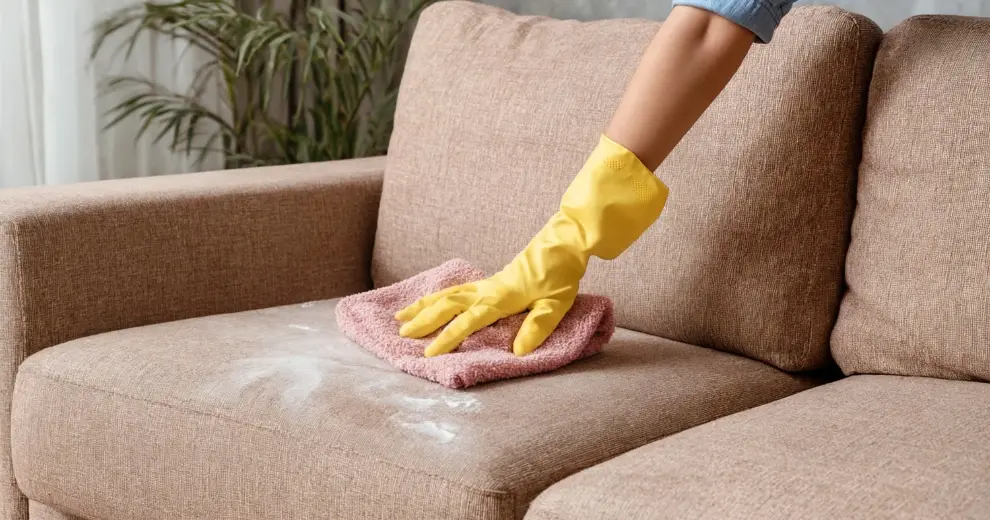
How to deep clean a couch properly starts with the right method for your fabric, the right tools, and the right amount of moisture. If your sofa smells stale, shows dark stains, or feels sticky, this guide gives you a safe, proven solution from the first step to full drying.
Most couch damage happens from overwetting, using the wrong cleaner, or skipping the care tag check. In fact, upholstery experts warn that excess moisture is one of the main causes of mold and fabric breakdown, according to guidance from The Spruce. Are you cleaning your sofa in a way that helps it, or slowly ruins it?
In this article, you will learn how to deep clean fabric couches using common tools such as a vacuum upholstery attachment, soft brush, microfiber cloth, and enzyme based cleaners. We also factor in local conditions like AC airflow, sand dust, and humidity for proper drying. For health and safety guidance on indoor cleaning and moisture control, we align with recommendations from the U.S. Environmental Protection Agency indoor air quality guidelines.
You will get clear steps, stain fixes, odor removal tips, and drying rules that actually work.
How to Deep Clean a Couch: 7 Proven Steps Overview
If you want a simple and reliable way to refresh your sofa, this 7-step system shows you exactly how to deep clean a couch without damaging the fabric. It focuses on removing dust, stains, and odors while keeping moisture under control, which is the most important factor in safe upholstery cleaning.
Many couches get ruined because people skip basic steps like checking the care tag or drying properly. This method prevents color fading, water marks, and mold buildup by guiding you through each stage in the right order. Whether you are dealing with everyday dirt, pet hair, or light stains, these steps help restore comfort and freshness without expensive equipment.
By following this process, you save time, protect your furniture, and extend the life of your couch. You also avoid harsh chemicals and risky shortcuts that can cause long-term damage.
The Complete 7 Step Couch Cleaning System
- Step 1: Vacuum deeply
Remove loose dust, crumbs, and pet hair from cushions, seams, and corners. - Step 2: Check fabric care tag
Identify W, S, WS, or X codes to choose the correct cleaning method. - Step 3: Spot test cleaners
Test products on a hidden area to prevent discoloration. - Step 4: Pre treat stains
Gently treat spills and marks before full cleaning. - Step 5: Deep clean in sections
Work in small areas using light moisture for even results. - Step 6: Remove residue
Wipe away soap and dirt to avoid sticky buildup. - Step 7: Dry and reset fabric
Use airflow to dry fully and fluff cushions back into shape.
Who Should Use This Method
- Homes with kids or pets
- Dusty and humid environments
- Regular maintenance and seasonal deep cleaning
This system gives you a clean, fresh couch while keeping your upholstery safe and long lasting.
Step 1: Vacuum Your Couch Thoroughly
Before using any cleaner, vacuuming your couch is the most important first step. It removes loose dust, crumbs, pet hair, and allergens that sit deep inside the fabric. If you skip this step, dirt turns into muddy residue when mixed with moisture, making stains worse and spreading grime across the sofa.
Regular vacuuming also helps lift crushed fibers and improves airflow during drying. This makes the deep cleaning process more effective and reduces the risk of odors and mold. For best results, vacuum slowly and work in overlapping strokes instead of rushing through the surface.
Why Vacuuming Is the Foundation of Deep Cleaning
Vacuuming clears away up to 80 percent of surface debris before you apply any liquid. It prevents dirt from being pushed deeper into the fabric and protects your couch from premature wear. A properly vacuumed sofa also absorbs cleaning solutions more evenly, giving you better final results.
Best Upholstery Attachments and Tools
Use an upholstery brush attachment to loosen embedded dirt. A crevice tool helps reach tight gaps between cushions and along edges. If you have pets, a rubber brush or pet hair tool can remove stubborn fur more effectively than standard nozzles.
Common Vacuuming Mistakes to Avoid
Avoid using high suction on delicate fabrics. Do not vacuum wet surfaces. Never skip hidden areas. Rushing this step reduces the effectiveness of the entire deep cleaning process.
Step 2: Check the Care Tag and Fabric Type
Every couch has a care label that tells you how it should be cleaned. Checking this tag before you start protects your sofa from shrinking, fading, and texture damage. Many upholstery problems happen because people use water or chemicals that the fabric cannot handle.
Understanding fabric codes helps you choose the right cleaning method and prevents costly mistakes. It also saves time by eliminating trial and error.
How to Find Upholstery Care Labels
Look under seat cushions, along the back panel, or beneath the sofa frame. The label is usually stitched inside or attached to a hidden flap. If you cannot find it, check the manufacturer’s website or product manual.
What W, S, WS, and X Codes Mean
- W means water based cleaners are safe
- S means solvent based cleaners only
- WS means both water and solvent are acceptable
- X means vacuum only, professional cleaning required
What Happens If You Ignore Fabric Codes
Using the wrong method can cause color bleeding, stiff texture, permanent water marks, and fabric breakdown. In severe cases, the couch may become unusable. Always follow the care tag to protect your investment.
Step 3: Spot Test Before Applying Any Cleaner
Before applying any product to your sofa, always perform a spot test. This simple step helps you check whether a cleaner is safe for your fabric and prevents permanent damage. Even mild looking solutions can cause color fading, texture changes, or stiff patches if they react badly with upholstery fibers.
A proper spot test protects your couch from costly mistakes and gives you confidence before deep cleaning. Skipping this step is one of the main reasons people end up with uneven color or water marks after cleaning.
How to Perform a Proper Colorfastness Test
Mix or prepare your chosen cleaner according to instructions. Apply a small amount to a white cloth. Gently dab a hidden part of the couch and let it sit for five to ten minutes. Blot again with a clean cloth. If no color transfers and the fabric feels normal after drying, the cleaner is safe to use.
Signs a Cleaner Is Unsafe
Stop immediately if you notice color bleeding, fading, rough texture, sticky residue, or fabric distortion. These signs mean the product is damaging the material and should not be used.
Step 4: Pre Treat Stains and High Traffic Areas
Pre-treating stains is essential for successful couch cleaning. Targeting problem spots before deep cleaning helps loosen dirt, oils, and odors, making them easier to remove. High traffic areas like armrests, seat centers, and headrest zones often collect body oils and dust that need extra attention.
Identifying Different Types of Couch Stains
- Oil and grease
From food, skin oils, and lotions. These stains attract dirt and spread easily. - Food and drinks
Coffee, tea, juice, and sauces can leave dark marks and sticky residue. - Pet stains
Urine and vomit cause strong odors and deep fiber contamination. - Ink and dye
Pen marks and clothing transfer can permanently stain fabric if untreated.
Safe DIY Stain Removal Solutions
For light stains, use mild dish soap mixed with warm water and create light foam. Dab gently with a microfiber cloth. For odors and organic stains, use enzyme based cleaners designed for upholstery. Always follow with a clean water blot to remove residue.
Why Scrubbing Makes Stains Worse
Scrubbing pushes stains deeper into fibers and damages fabric structure. It also spreads the mark outward, making it larger and harder to remove. Always blot gently and work from the outside toward the center.
Step 5: Deep Clean the Couch in Small Sections
Once stains are pre treated, it is time to deep clean the couch. Working in small sections is the safest and most effective way to clean fabric sofas at home. This prevents overwetting, uneven results, and long drying times.
Mixing the Right Cleaning Solution
Use a mild solution based on your fabric code. For W or WS fabrics, mix a small amount of gentle dish soap with warm distilled water and create light foam. Avoid soaking the cloth. The goal is to clean with suds, not water. For S fabrics, use a solvent based upholstery cleaner and follow the product instructions closely.
Always use clean white microfiber cloths to avoid color transfer.
How to Clean Without Overwetting
Dip your cloth into the foam only. Gently blot and lightly brush the fabric in one direction. Never pour liquid directly onto the couch. Excess moisture can cause water marks, odor buildup, and slow drying. Clean one small area at a time and move on only after wiping away dirt.
Working Pattern for Even Cleaning
Start from the top and work downward. Clean armrests first, then seat cushions, then sides. Use overlapping strokes to avoid patchy areas and maintain uniform color.
Step 6: Remove Soap Residue and Moisture
Removing leftover soap is just as important as cleaning. Residue left in fabric attracts dirt and makes the couch feel sticky after drying.
Why Leftover Soap Attracts Dirt
Soap residue acts like a magnet for dust and oils. It causes the couch to get dirty faster and can leave dull patches on fabric.
Rinsing Techniques for Fabric Sofas
Lightly dampen a clean cloth with plain water. Wipe the cleaned area gently to lift soap residue. Follow immediately with a dry cloth to absorb moisture.
Using Distilled Water for Better Results
Distilled water prevents mineral deposits and reduces water marks, especially on light colored fabric.
How to Check for Sticky Residue
After drying, lightly rub the surface with your hand. If it feels tacky or stiff, repeat the rinse and blot process.
Step 7: Dry and Restore Your Couch Properly
Proper drying is critical to prevent mold, mildew, and odors. A couch should feel completely dry before use.
Ideal Drying Times by Fabric Thickness
Thin fabrics may dry within four to six hours. Thicker cushions can take eight to twelve hours depending on airflow and humidity.
Using Fans and AC for Faster Drying
Position fans to move air across the couch, not directly into it. Turn on AC to reduce humidity and speed up evaporation.
Drying Tips for Humid and Dusty Climates
Keep windows closed during dust storms. Use dehumidifiers if available. Avoid covering the couch while it dries.
Fluffing Cushions and Resetting Fabric Nap
Once dry, brush the fabric lightly to restore texture. Fluff cushions and rotate them to maintain shape and comfort.
After the 7 Steps, How to Keep Your Couch Clean Longer
Maintaining your couch after deep cleaning helps extend its life and reduces the need for frequent heavy cleaning. Simple habits can keep your sofa fresh and comfortable year round.
Weekly and Monthly Cleaning Routine
Vacuum your couch once a week to remove dust and pet hair. Rotate cushions every month to prevent uneven wear. Spot clean spills immediately before stains set.
Protective Covers and Fabric Sprays
Use washable covers in high traffic homes. Apply fabric protectors approved for upholstery to reduce stain absorption. Always test sprays before full application.
When the 7 Step Method Is Not Enough, Call Professionals
Some couch problems cannot be solved with home cleaning. Knowing when to hire professionals saves time and prevents further damage.
Warning Signs of Serious Damage
- X coded fabric that cannot be cleaned with liquids
- Mold odor that returns after drying
- Water saturation from leaks or flooding
DIY vs Professional Cleaning Comparison
DIY cleaning is affordable and works for routine maintenance. Professional services use advanced equipment and specialized solutions for deep contamination, delicate fabrics, and severe staining. In these cases, expert care delivers safer and longer-lasting results.
Why Choose Bright Street Facilities Management for Sofa Cleaning
If your couch needs more than DIY care, Bright Street Facilities Management offers professional sofa and upholstery cleaning designed for real home conditions in Abu Dhabi.
We understand that dust, humidity, pets, and daily use make sofas harder to maintain. That is why our team uses fabric-safe methods, controlled moisture cleaning, and proper drying techniques to deliver visible results without damaging your furniture.
What Makes BSFM the Right Choice
- Fabric-safe cleaning methods
We follow upholstery care codes and use the correct solution for each fabric type. - Advanced equipment with controlled moisture
Deep cleaning without overwetting, reducing mold and odor risk. - Experienced and trained technicians
Skilled professionals who know how to handle delicate and high-use sofas. - Ideal for Abu Dhabi homes and apartments
Our process accounts for dust, humidity, and indoor air quality. - Convenient and reliable service
On-time appointments, clear pricing, and customer-focused support.
If your sofa has deep stains, persistent odors, or sensitive fabric that needs expert care, professional cleaning is the safest option.
Conclusion
Deep cleaning your couch does not have to be complicated. By following the 7 proven steps, vacuuming properly, checking fabric codes, treating stains early, controlling moisture, and drying correctly, you can remove dirt, odors, and allergens while protecting your upholstery. These methods help extend the life of your sofa and keep your home healthier and more comfortable.
If your couch has deep stains, strong odors, or delicate fabric, professional care is often the safest choice. Bright Street Facilities Management provides expert sofa cleaning in Abu Dhabi using fabric-safe methods and advanced equipment.
Frequently Asked Questions
How to clean sofa at home without vacuum cleaner
You can remove dust and debris by using a soft brush, lint roller, or slightly damp microfiber cloth. Gently brush the surface, then wipe with a dry towel to lift dirt before deep cleaning.
How to clean cloth sofa with baking soda
Sprinkle baking soda evenly over the sofa and let it sit for 20 to 30 minutes. Then brush or wipe it off with a dry cloth. This helps absorb odors and loosen light dirt.
How to clean fabric chairs without upholstery cleaner
Mix a few drops of mild dish soap with warm water. Create light foam and gently blot the fabric using a clean cloth. Avoid soaking the chair and dry it quickly.
How to clean a sofa with an iron
Place a damp cotton cloth over the stained area and gently press with a warm iron. The steam helps lift dirt into the cloth. Always test first and avoid high heat.
How to wash sofa at home
Do not fully soak your sofa. Instead, clean it in sections using light moisture, mild soap, and a soft cloth. Rinse gently and dry completely with fans or AC.
Cleaning couch hack that actually works
A simple hack is using dish soap foam and a microfiber cloth for quick cleaning. Apply only foam, blot gently, and wipe dry. This prevents water marks and damage.
How to clean jute sofa safely
Use dry cleaning methods only. Vacuum gently or use a soft brush. Avoid water, as jute absorbs moisture and can lose shape or grow mold. For deep stains, hire professionals.